Fantasy Interactive Fiction and Where to Start
Fantasy interactive fiction comes in four forms: gamebooks, parser games, choice-based novels and AI narrators. Here is what each one asks of you.
Fantasy interactive fiction is the oldest and largest branch of the form, and it arrives in four shapes: printed gamebooks, parser games you type commands into, choice-based novels you read by tapping, and AI narrators that compose each scene as you reach it. Which one to start with depends on how much work you are willing to do before the story gives anything back. The prose is the same medium in all four; only the price of admission changes.
- Fantasy interactive fiction splits into four formats, and each asks a different amount of work from the reader.
- Fantasy suits prose because scale and magic cost a writer nothing and a renderer everything.
- Parser games ask you to learn a verb vocabulary before the story opens; choice-based novels ask only for a tap.
- Inform, the language behind much parser fiction, calls itself a programming language for creating interactive fiction using natural language syntax.
- A live narrator removes the wait for an author to have anticipated your move, and gives up the guarantee that someone wrote it well.
Why fantasy interactive fiction reads better than it renders
Fantasy is cheap to describe and ruinously expensive to show. A drowned city, a wood older than the road that crosses it, a god with a bureaucratic streak: each costs a studio a year of art direction and a writer about a line. Text is the only medium where the budget for scale is the same as the budget for a kitchen argument, which is why the genre settled here first and never entirely left.
The other fit is quieter. Fantasy runs on things prose is unusually good at holding: names, oaths, inheritance, weather, the exact wording of a bargain. A screen shows you a forest. A sentence can tell you the forest remembers who walked through it, which is not a picture at all but a fact about the world, and facts about the world are what the genre is made of.
The four doors into fantasy interactive fiction
Every fantasy story you can steer comes through one of four doors, and the differences between them are practical rather than literary. Each door decides what you type or tap, how much bookkeeping you carry, and how far off the marked path you can walk before the story stops having an answer for you.
| Format | How you act | What it asks of you | What it gives back |
|---|---|---|---|
| Printed gamebook | Turn to a numbered section | Bookkeeping, often dice and a pencil | Paper, and an ending reachable in one evening |
| Parser game | Type a command | A verb vocabulary and patience for puzzles | The deepest simulated worlds in the form |
| Choice-based novel | Tap one of the listed options | Attention, and nothing else | Edited prose in clean, phone-sized sessions |
| AI narration | Write your move in your own words | One sentence of your own | A scene nobody wrote in advance |
Nothing here is a ladder. A reader who loves parser puzzles may find choice-based novels thin, and a reader who came for the writing may find a puzzle an obstacle between them and the next paragraph. The doors lead into different rooms of the same house.
Gamebooks: the version that needs no screen
The Fighting Fantasy line and the branching adventure books that surrounded it taught a generation that a book could be argued with. Their machinery is visible and slightly clanking: a character sheet in the front, dice to settle a fight, a rule that you should not keep a finger in the page you came from. That machinery is also what a lot of modern readers now leave behind, for reasons worth separating from nostalgia.
Parser games: the deepest worlds, at a price
Infocom’s fantasies — the Zork games, and Enchanter with its spellbook — set the standard the tradition still measures itself against. You type, the world answers, and a good parser game holds a model detailed enough to know that a rope is also a thing you can tie. The cost is real: you learn the verbs, you map, and you sometimes stall for an hour on a locked door.
Choice-based novels: the format the app stores are full of
Tap-to-continue fantasy is the most widely distributed form by a wide margin, and quality inside it varies more than in any other door. The good ones are simply novels with forks. The rest are metering machines with a fantasy skin, which is why interactive fiction apps for adults are harder to find than the category size suggests.
What the authoring tools tell you before you read a word
The languages this work is written in name their own ambitions, and the names predict how the finished story reads. Three are worth knowing, because between them they account for most fantasy interactive fiction released in the last decade, and each was built by people with a different idea of what the reader is doing.
| Tool | How it describes itself | What that predicts |
|---|---|---|
| Inform | “A programming language for creating interactive fiction, using natural language syntax” | Simulated worlds, typed commands, literary ambition |
| ink | “inkle’s scripting language for writing interactive narrative” | Branching prose, often inside a graphical game |
| ChoiceScript | “A language for developing multiple-choice games” | Stat-driven interactive novels with listed options |
Inform’s own documentation notes that it is used as a medium for literary writing, as a prototyping tool in the games industry, and in education, including university courses on digital narrative. That range is a fair summary of where the form sits: half literature, half software, taught in both departments and fully owned by neither.
What changes when a fantasy world is written live
An AI narrator removes the last constraint the other three doors share: that someone anticipated your move. Nothing is pre-written, so the story can answer a sentence no author ever considered. What you give up is the guarantee that came with anticipation — that a human being sat with this paragraph and made it good.
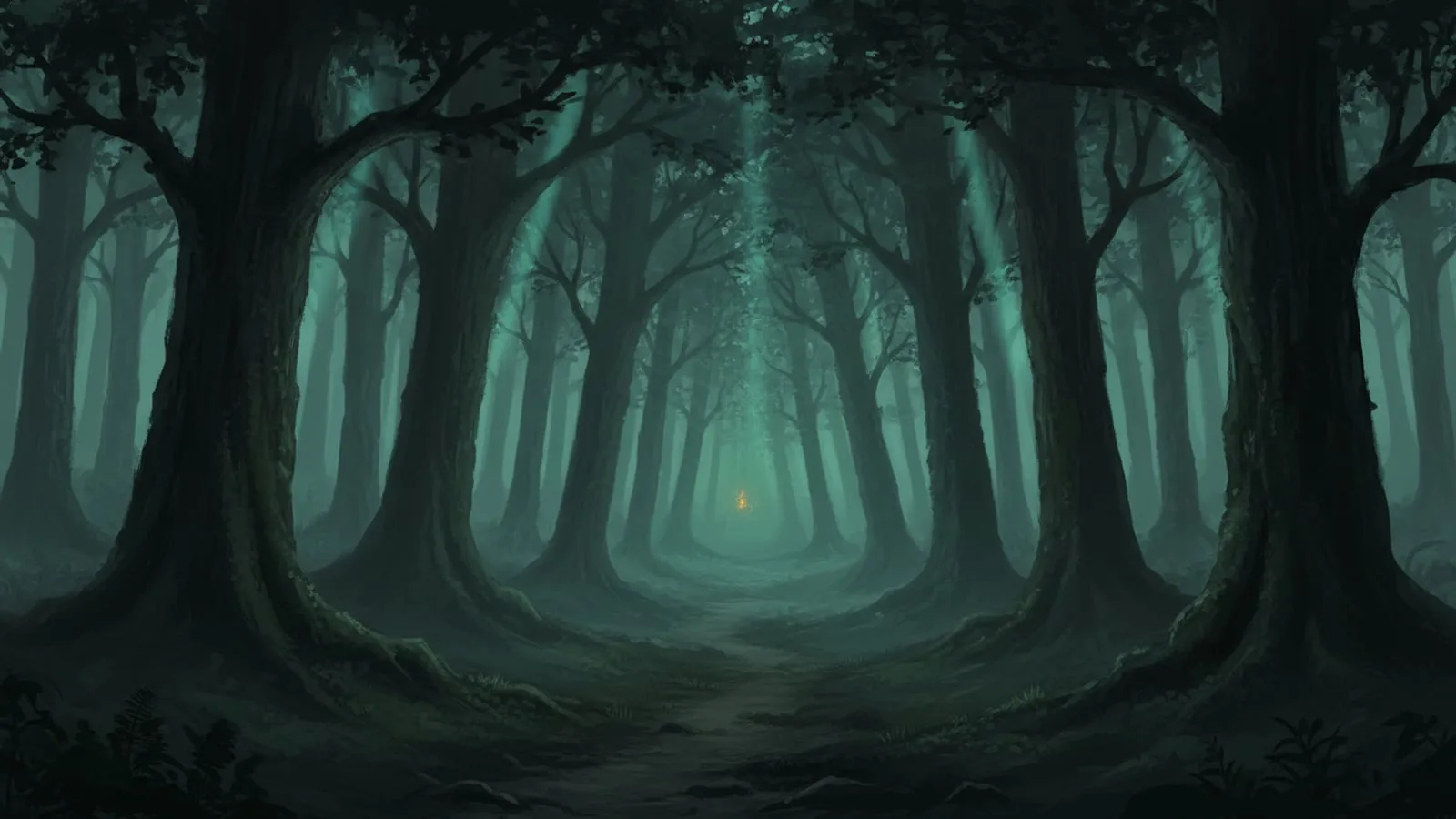
Fabledrift, an interactive fiction app for Android, is built on that trade. It generates every scene live from the story’s structured memory, and it reads like a book rather than a chat log: no stats, no dice, no quest log, just the page. Its fantasy world, The Emberwood, is described as a forest that remembers every promise made beneath its branches, which is a premise only a story with memory can pay off. The same requirement governs sorcery, which is why magic systems in interactive fiction hold up only when their costs are recorded rather than implied.
The reading skill is different too, and slighter than people expect. Instead of choosing from a list, you write what you do or say in your own words, and the narrator answers in prose; if you want the short version of how that goes well, our notes on writing a good move in an AI story cover most of it.
Four weeks, four doors
If you want a route rather than a list, spend a month walking through all four and decide afterward which room you want to live in.
- Week one, choice-based. Read one complete interactive novel on your phone. It costs nothing but evenings and shows you what a fork feels like.
- Week two, parser. Play a classic fantasy parser game with a walkthrough open beside you. Using it is not cheating; the point is to see the simulation, not to beat it.
- Week three, paper. Find a secondhand gamebook and play it honestly, dice and all, once through to a real ending.
- Week four, live. Start one AI-narrated story and write every move as a full sentence, then reread the first scene at the end of the week to see how far the world drifted from where it began.
At the end of the month you will know which of the four you actually read, as opposed to which one you admire. That is the only recommendation worth having in a genre this large, and it is the one no list of titles can give you.
Frequently asked questions
What is fantasy interactive fiction?
A story told in prose that you steer as you read, set in a world with magic, old orders or invented geography. The steering can happen by turning to a numbered section, typing a command, tapping a listed choice, or writing your own move for a narrator to answer.
Where should a beginner start with fantasy interactive fiction?
Start with a choice-based novel if you want to be reading within a minute, a parser game if you enjoy puzzles and maps, and a printed gamebook if you want the version that needs no screen. None of them require having read any of the others first.
What is the difference between a gamebook and a parser game?
A gamebook offers you a fixed set of numbered paragraphs to turn to, so every route was written down in advance. A parser game asks you to type what you want to do and simulates a world that can answer commands its author never explicitly listed.
Are fantasy text adventures still being written?
Yes. The tools are public and actively maintained, including Inform for parser games and ink for branching narrative, and new fantasy work is released every year through independent catalogs and storefronts rather than through large publishers.
Do I need to learn commands to read an AI-narrated fantasy story?
No. An AI narrator reads ordinary sentences, so "ask the miller who owns the far field" works as well as any command. Most apps also print a few suggested openings on the page if you would rather not compose a line yourself.